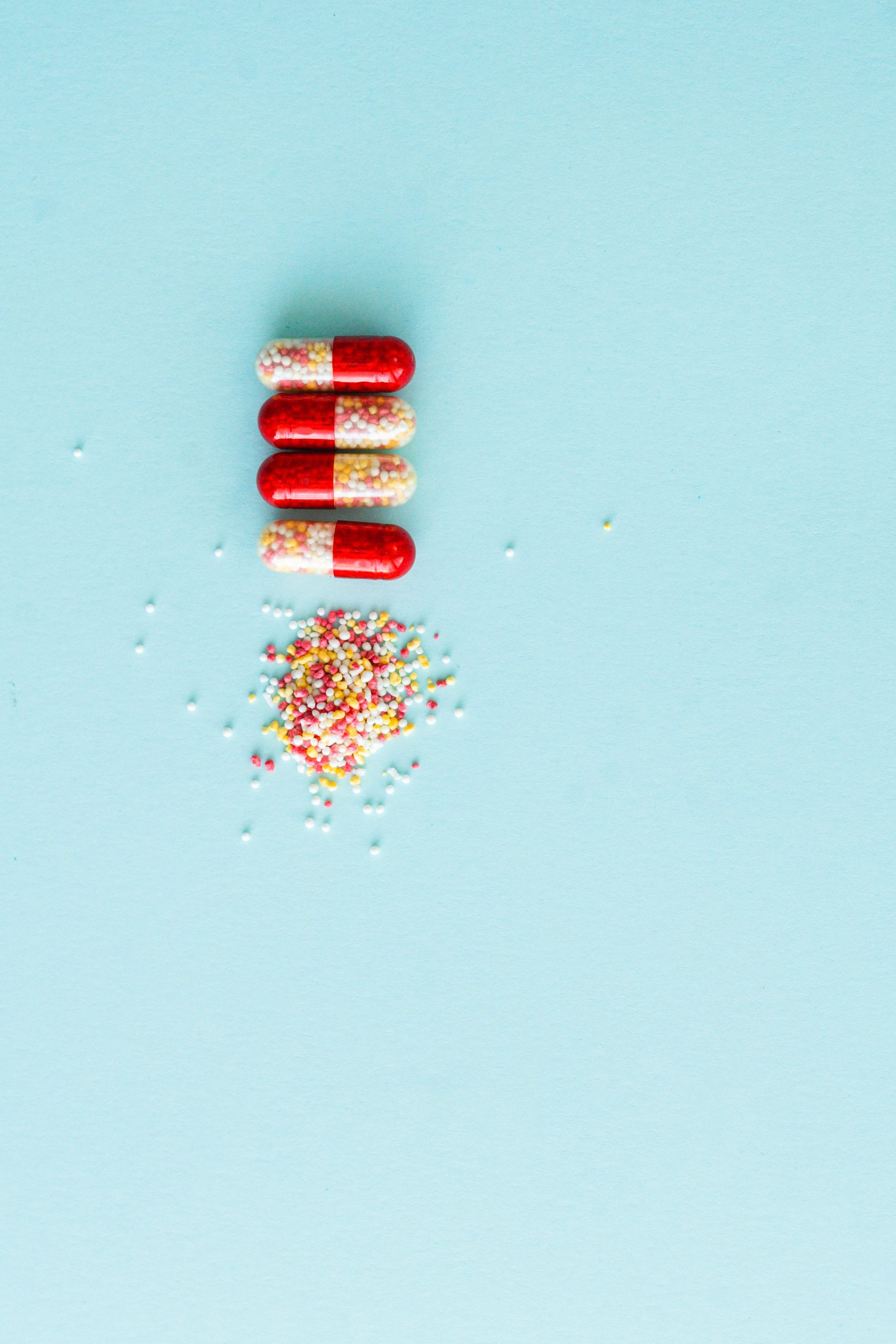
To continue our series on pharmaceutical dosage forms, let’s compare granules and pellets. At first glance, both terms describe small particles. So what’s the difference?
As usual, let’s turn to the regulators for definitions. I’m referencing the Standard Terms database from the European Directorate for the Quality of Medicines, where the terms are available in 35 languages, not only the official languages of the European Union. So you can check the translations into your language right after reading this blog.
So, back to our dosage forms. Granules are defined by the EDQM as:
Granules (human and veterinary) – Solid single-dose or multidose preparation consisting of solid, dry aggregates of powder particles that are sufficiently resistant to withstand handling. Granules are intended for oral use to release active substance(s) in the gastrointestinal fluids by a rate depending essentially on the intrinsic properties of the active substance(s) (conventional release). They may be swallowed as such and/or chewed before swallowing, and some may also be dissolved or dispersed in water or another suitable liquid before oral administration.
The database also contains a lot of derivatives, like coated granules, effervescent granules, film-coated granules and others. There are also granules for oral solution and granules for oral suspension that are used to prepare other finished dosage forms. Overall, it’s a versatile dosage form that is widely used in the industry for both human and veterinary medications.
Pellets are included in the EDQM database as a dosage form only for veterinary use. Here it is:
Medicated pellets – Solid single-dose or multidose preparation intended for veterinary use, consisting of large granules, usually formed by extrusion, intended for oral use.
The difference between granules and pellets is technical. It lies in their size, shape, and manufacturing technology.1,2
| Granules | Pellets |
| Non-uniform shape and size 0.1 to 4.0 mm | Uniform spherical or semi-spherical particles 0.5 to 2.0 mm |
| More porous | Less porous |
| Granulation (aggregation of powder particles): – dry, – wet, – high-speed granulation. | Pelletization techniques: – extrusion-spheronization, – powder layering, – solution/suspension layering |
Why are pellets not included in dosage forms for human use? Well, a dosage form refers to the physical form in which a drug is produced and administered. And pellets in the pharmaceutical industry are usually put in a capsule or pressed together to form a tablet. That’s why you won’t find a human dosage form that’s called pellets, but you will find granules.
You might encounter another term in medical texts: pillules. The EDQM defines them as:
Pillules – Solid preparation for homoeopathic use, obtained from sucrose, lactose or other suitable excipients. Pillules may be prepared by impregnation of preformed pillules with a dilution or dilutions of homoeopathic stocks or by progressive addition of these excipients and the addition of a dilution or dilutions of homoeopathic stocks. Pillules are intended for oral or sublingual use.
Note that pillules are clearly defined as homeopathic medicine.
To sum up, granules and pellets are very similar forms that are used as a standalone dosage form or an intermediate product in the pharmaceutical industry. Medicated pellets for veterinary use are even defined as large granules by the EDQM.